Protecting Proprietary Data While Letting AI Actually Use It
How regulated enterprises can expose proprietary data to private AI, RAG, and agents without losing control, using classification, identity, and audit.
Indexing a proprietary corpus into a vector store that strips source-system permissions, then asking the prompt to decide who sees each record, is the mistake this piece helps avoid. Samsung banned ChatGPT in May 2023 after engineers leaked semiconductor source code into the public interface.
Making internal contracts, source code, customer records, pricing, and formulas fully reachable by a private model without losing provenance, scope, or audit depends on controls that sit outside the prompt, and on a corpus where a classification tag, an identity, and a policy together decide what any given retrieval returns.
Classify Before the Index Touches a Vector Store
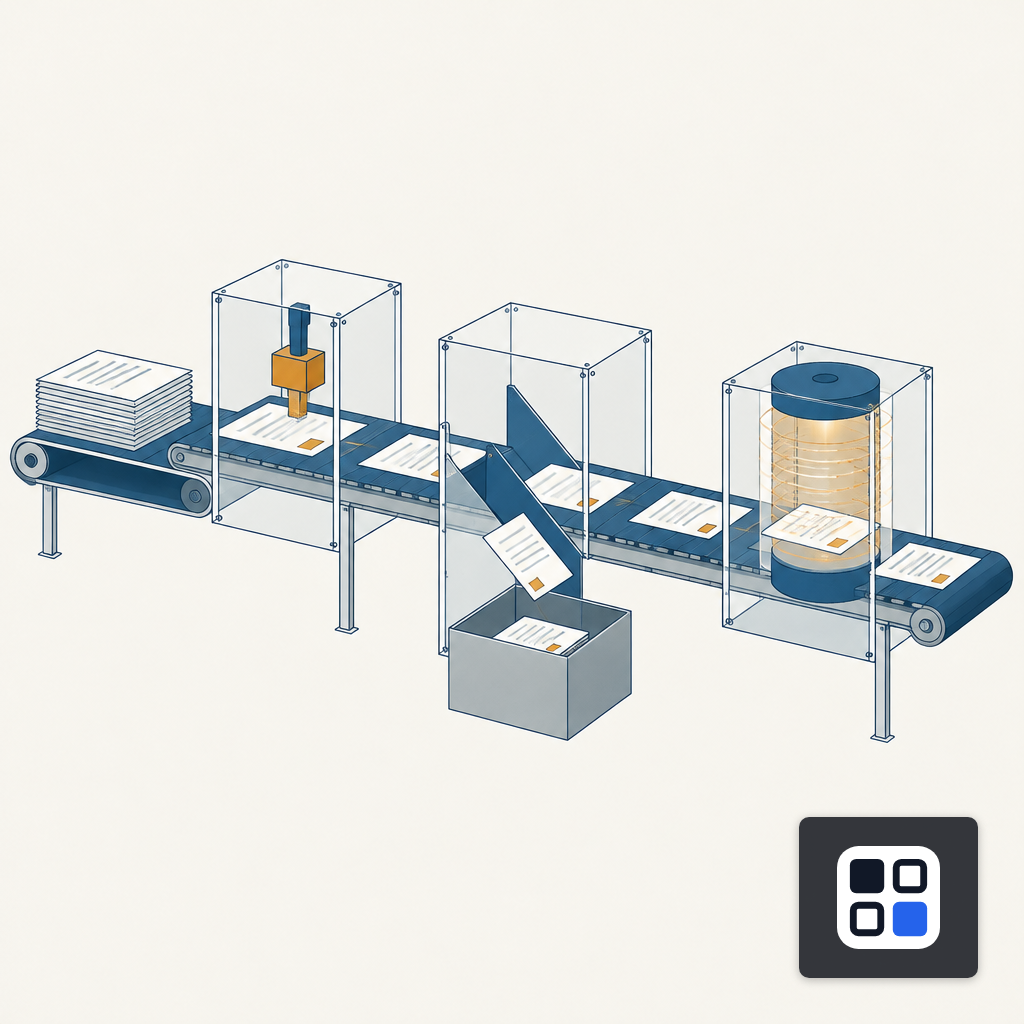
Classification is where proprietary data protection either holds or quietly collapses. IDC estimates that around 90% of enterprise data is unstructured, which means most of what a retrieval pipeline will ingest arrived without a clean confidentiality tag. Running classification at ingestion (regex and ML detectors for identifiers, cue phrases for contract clauses, filename and path heuristics, source-system label inheritance) turns an unlabeled corpus into one where every chunk carries a sensitivity and category tag that downstream policy can read.
The tag is the handle. Without it, nothing further in the pipeline can distinguish a routine SOW from a settlement agreement, or a public press release from a term sheet. Enterprise data classification is unglamorous work, and it is also the step that makes permission-aware retrieval and chunk-level provenance real rather than aspirational. Skip it, and every later control is operating on an undifferentiated blob of text.
Permission-Aware Retrieval, Enforced Outside the Prompt
Permission-aware RAG means the retrieval step itself refuses to return chunks the requesting user is not entitled to read, resolved against current identity in the IdP, not against instructions pasted into the context window. Each chunk has to carry the ACL from its source system, and the retriever has to intersect those ACLs with the caller's groups before the top-k rerank ever runs. A membership change in Okta, Entra ID, or Workday is then the only lever that changes what the model can surface.
That control sequence maps onto a published governance frame many security teams already use for AI:
A related post on why access control cannot live in the prompt walks through the specific failure modes. The short version: a model told "do not reveal document X" will reveal document X when asked the right follow-up, and the audit trail will show the model complying with the prompt, not breaking a policy. Enforcement has to sit at the retrieval and tool-call layer, where the decision is deterministic and logged against a known identity.
Keep Provenance Attached to Every Chunk
A chunk returned from the vector store should carry a minimum metadata set:
- source document ID and source system
- version or revision of the document
- classification tag and inherited ACL
- ingestion timestamp and classifier version
- pointer to the current authoritative copy
When the model cites a fact, the citation resolves back to that record. When the record changes or is withdrawn, the chunk is re-indexed or evicted rather than drifting out of sync with the system of record.
Provenance is what makes an AI answer defensible. It lets a reviewer confirm the model quoted the current contract rather than a superseded draft, it lets legal respond to a production request with the specific documents the model touched, and it lets security respond to an incident by naming, within minutes, which chunks were retrieved by which user against which policy. Internal knowledge retrieval controls that lack provenance leave every downstream question unanswerable.
The Exfiltration Risk You Can Measure
Exfiltration risk in a private-AI setting is a measurable function of how much sensitive content is reachable, by how many identities, through how many channels, with how much logging. The IBM 2025 Cost of a Data Breach Report found that organizations with high shadow-AI exposure paid an additional $670,000 per breach, and that 97% of breached organizations with AI-related incidents lacked proper AI access controls. The signal there is not the dollar figure. It is the share: the controls were absent, not failing.
Gartner's forecast that more than 40% of enterprises will face a shadow-AI incident by 2030 assumes the same pattern of unmetered access persists. Measuring the risk concretely means publishing, for each private model and agent, the count of distinct documents reachable, the distribution of classifications across those documents, and the percentage of retrievals that were filtered out by policy. Numbers that move are controls that work.
Audit Retrieval, Not Just Prompts
Prompt logs are evidence of what the user asked. They are not evidence of what the model saw. An audit log that is useful to a compliance officer records every retrieved chunk, its provenance, the classification bucket it fell in, the policy that admitted or blocked it, the identity that requested it, and the agent or tool that acted on it. The EU AI Act's Annex III obligations become enforceable for high-risk deployers on August 2, 2026, with penalties reaching 3% of global turnover, and the recording described above is exactly what evidencing compliance in front of a regulator looks like.
The Data.co Control plane writes a signed, append-only record of each policy decision at the retrieval and tool-call boundaries, so the audit question of who got what, when, under which rule has a direct answer rather than an inferred one. That same record is what lets a security team reconstruct a suspected leak without interrogating the model itself, which is useful because the model will not tell you what it saw yesterday.
Where to Draw the Line on Private AI for Internal Data
Pick the private, permission-aware path when three conditions hold at the same time: the corpus contains records a subset of the workforce is not entitled to read; a regulator or contract counterpart will eventually ask for proof of who saw what; and the business case for AI depends on reaching that corpus rather than a sanitized subset of it.
An earlier overview of enterprise AI security by the numbers covers the base rates. What decides this specific build-versus-narrow question is whether classification, ACL propagation, and retrieval-layer audit are present today. If any one of those three is missing, narrow the corpus until the controls catch up, rather than widen the prompt until the model behaves.
- 1Mark confidentialMark the information as confidential so handlers know it is a trade secret.
- 2Limit accessPlace physical and technological restrictions on who can reach the information.
- 3Non-disclosure agreementsBind employees, suppliers, and partners against unauthorized use or disclosure.
- 4Review 'need to know'Periodically review which employees still need access to the trade secret.
- 5Build a confidentiality cultureMake maintaining confidentiality a priority across the workforce.
Timothy Carter is Chief Revenue Officer and has spent over two decades in SEO and digital marketing. At Data.co his focus is the buyer's side of private AI: what a security or data team needs to see before an AI project leaves the pilot stage, and why the hardest question is usually not which model to run but which data it is allowed to touch. He has written for Forbes, Entrepreneur, Marketing Land, Search Engine Journal and ReadWrite, and tends to start from what the buyer already knows is broken rather than from the feature list.